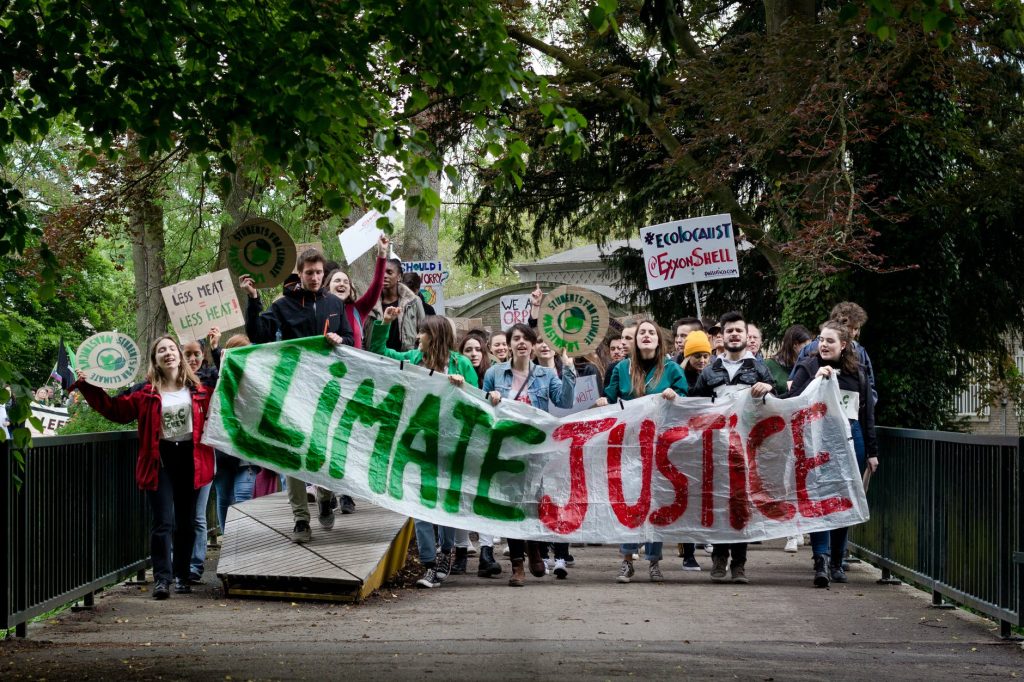
t’s Too Late Anyway: Tackling Climate Doomism in Your Classroom

Mid-lesson, maybe science, maybe renewable energy, carbon footprints, the Paris Agreement when a student asks, (or comments): “It doesn’t matter though. We’ve already gone too far.” Or: “By the time I’m an adult the world will already be ruined.” Or simply: “What’s the point?” This is climate doomism. And it is not the same as climate anxiety – climate doomism causes different issues in the classroom.

Climate Doomism vs anxiety: why the distinction matters in the classroom

Climate anxiety is fear and worry about the climate crisis, it’s more of an emotional response to a real and serious threat. Climate doomism is something more specific: the belief that catastrophic climate change is now inevitable, that effective action is impossible, and that there is therefore no point in trying. Apathy is a symptom of this in the classroom.

The distinction matters because doomism produces the same outcome as denial: inaction. As climate scientist Michael Mann puts it, promoting doom and despair and the notion that it is too late to do anything is literally stealing young people’s future away from them.

Research published in Frontiers in Communication (2024) found that climate doomism is now more prevalent than climate scepticism as a reason for opposing climate action – particularly among young people. The belief that catastrophe is inevitable has become, for some, the default response to climate information.

For teachers, this is a huge challenge. A pupil in the grip of doomism is not simply anxious, they are disengaged from the possibility of change. And disengagement is the one outcome that climate education must not produce.

Where does doomism come from?

  • climate news is disproportionately apocalyptic. Thanks to social media algorithms tipping points and worst-case scenarios dominate in ways that create a pervasive sense that it is already too late
  • pupils who understand the science know how fast we need to move. When they look at the pace of actual change, the gap can feel like confirmation that it is hopeless
  • how climate change is described (and the language used) matters. Framing it as a cliff edge, or a single point of no return, is more likely to produce doomism than framing it as a minefield: dangerous, but navigable
  • some doomism is a genuine emotional response to real loss. Species extinction, habitat destruction, extreme weather. This grief is real and we can’t ignore it.

What the science actually says

The most important thing a teacher can offer a doomist pupil is accurate information – the facts do not support the doomist position. It is true that some consequences of climate change are now unavoidable, and that the warming already locked in will continue to have effects for decades.

It is not true that catastrophic, civilisation-ending warming is inevitable. The IPCC is clear: every fraction of a degree of additional warming that is avoided matters. The difference between 1.5°C and 2°C of warming is there for a reason, it represents hundreds of millions of people, countless species, and vast areas of habitable land.

The trajectory has already changed significantly. Renewable energy is the fastest-growing energy source in history. The cost of solar has fallen by over 90% in a decade. Emissions from the energy sector are beginning to fall in many countries.

None of this means the problem is solved. But it means that what happens next is not predetermined. It depends on what people do — including the people currently sitting in your classroom.

Tackling Climate Doomism: What works in the classroom

1. Take the statement seriously

The worst response is dismissal. Pupils who say it is too late are often the ones who have engaged most seriously with the science. Acknowledge the difficulty first: yes, the scale is real, and yes, some things have already changed that cannot be undone. Then move.

2. Distinguish what’s fixed from what isn’t

Help pupils see that the question is not whether climate change has happened (it has) but how bad it gets from hereonin, and that the answer depends on what people do. There is no threshold beyond which action becomes pointless. More action always means less damage.

3. Bring in the evidence of change

Doomism thrives in an information vacuum. Fill it:

  • Renewable energy now generates over 40% of UK electricity – unimaginable two decades ago
  • The ozone layer is recovering because countries agreed to act and acted – the most important proof of concept in environmental history
  • The rate of deforestation in the Brazilian Amazon fell by 50% in a single year following a change of government
  • Young people have driven policy changes – climate strikes, legal challenges – that were not predicted and were not inevitable

4. Give them something to do

Agency is the most effective response to doomism. A pupil with something real to contribute, an eco group, a community project, a presentation to governors, is harder to doom than one who is only receiving information about the scale of the problem.

5. Validate the grief – but keep moving

Some doomism is grief. Allow space to acknowledge loss before pivoting to solutions, but help pupils understand that grief and action are not incompatible. Many of the most committed climate activists describe themselves as grieving and acting at the same time.

Climate Doomissm – Classroom scenarios

Scenario 1: “What’s the point? It’s already too late.”

What to say: Acknowledge it first – yes, this is serious. Then be accurate: the science doesn’t say it’s too late; it says every fraction of a degree we avoid matters. The difference between 1.5 and 3 degrees of warming is enormous. What happens from here isn’t fixed. It depends on what people do – including people your age.

Vvalidate, correct the scientific error, and reintroduce action.

Scenario 2: “China and America aren’t doing anything so what does it matter what we do?”

What to say: Take the geopolitical concern seriously, then correct it. China is the world’s largest installer of renewable energy. The US Inflation Reduction Act triggered the largest clean energy investment in American history. Neither is doing enough, but they are doing something. And UK action matters, directly and indirectly – countries influence each other.

Why it works: You take the concern seriously, correct specific errors, and restore a sense that action is connected across borders.

A note on your own doomism

We are not immune of course! If you sometimes feel that nothing you do matters, that the forces against meaningful change are simply too powerful, you are not alone. But doomism in the teacher is particularly damaging because it transmits – pupils can be sensitive to the emotional signals of the adults around them. Make sure you look after yourself, talk to others, be honest about your feelings!

The bottom line

Climate doomism in the classroom produces the same outcome as denial: disengagement and inaction. The response is not to minimise the crisis but to be accurate about it, namely; the science does not say it is too late, it says what happens next depends on what we do.

Teach that truth with honesty about the difficulty. Give pupils something real to do. And keep going yourself.

————

For support with climate education in your school — including managing difficult classroom conversations — get in touch.

Related reading on notyetzero.com

Climate Anxiety in the Classroom: How to Teach Without Frightening

When Climate Education Feels Political

The Science

References and further reading

Johnstone & Stickles — Navigating the climate change minefield: the influence of metaphor on climate doomism, Frontiers in Communication (2024)

Mann, M. — The New Climate War (2021)

IPCC — Sixth Assessment Report Synthesis

PMC — Conceptualizing Young People’s Experiences of Climate Change Awareness (2024)

GOV.UK — Mental health support for climate change

Education Support — teacher wellbeing helpline: 08000 562 561

Good Grief Network

notyetzero — The Science page

Browse by category

Read our guides for teachers